Showing posts with label green alternatives. Show all posts

Thursday, November 17, 2011

Green Beauty Mask

Every time there is a season change, my skin goes through a period of imbalance and imperfections. I normally have very sensitive skin and have always found that it reacts to any of the regular drugstore masks. Two years ago, I discovered this mask made from ingredients that are found in the average kitchen. And, there were only two of them!

Right now my skin is dry and breaking out, probably because my face is attempting to hold onto any form of oil it can to rehydrate, thus resulting in pimples. This mask always does the trick to get my equilibrium back and jump start my skin for the coming season. It works year round as well, seemingly taking care of whatever issue my skin might be having. Here is what you will need:


Plain yogurt and oatmeal, plus a spice grinder or anything else that you can grind the oats down in. If your skin is particularly oily or you have a large amount of blemishes, add a tablespoon of honey to the mixture, which is naturally antibacterial.

All you do to make the mask is take a small handful of oats and grind them up into a powder. Then mix the powder and a couple tablespoons of yogurt (and honey, if using) until a thick paste forms.


Now spread a thick layer all over your face (nose, up to eyes, etc.), being careful not to get any actually into your eyeballs. Now let it sit and dry onto your face for 15 minutes. Next, take a nice warm facecloth (I don't normally use these, but they make the process that much more luxurious and exfoliating) and slowly wipe off the mask, rinsing the cloth as needed. Now, moisturize your face with your favourite moisturizer and relish in how soft your face now is. Keep the rest of the mask in the refrigerator and use it up to once per week. Remember that it doesn't have any preservatives in it, so it won't last more than a couple weeks in the fridge. 

Enjoy!

Brenna

Tuesday, April 5, 2011

Green Alternatives: Teflon

Green Alternatives is a series that shows you the green alternatives to normally wasteful/toxic products. I use all of the featured products in my own home. I am not being paid to endorse any of the products in this series, I just really like them! In my opinion, a green alternative falls into at least 2 of these categories:
     1. They contain no toxic chemicals/fragrances/etc
2. They are reusable and/or eliminate/reduce the amount of waste normally produced with their           counterpart
     3. They contain less or no plastic
     4. They are produced by ethical companies who care about my health and the environment

Teflon is slowly becoming widely known as toxic, but is also the most commonly used coating on household pots, pans, and bakeware. The reason it is so undeniably popular is because it creates a non-stick surface on cookware, making cooking an apparent breeze. However, when Teflon is heated to high temperatures, it releases toxic fumes that will kill a bird if it is in the same room. Yes, that is correct. It will kill a bird. Well that was more than enough information for me to begin phasing Teflon coated products out of our house almost one year ago. Today I am proud to say that we no longer use any cookware that is Teflon coated. Yes, it has been a struggle to find some of the more commonly used items without this toxic coating, but I have managed to come up with a nicely stocked kitchen that functions just fine without it. 

I find it disturbing that one must search out products that do not have a non-stick coating. It is as if they have taken over the entire cookware section, suffocating everyone with their vile contents. I believe that consumers should have a choice when it comes to selecting their products, and not have to search high and low for something that won't potentially poison them. 

So what do I use as alternatives? For bakeware, I have a lovely set of aluminum muffin tins and cookie sheets. I have had no issues with the cookie sheets being "sticky", and do not grease them when I am making cookies. As far as the muffin tins go, I grease them, but I also always greased my non-stick muffin tins. I also have a glass brownie pan, glass bread pans, two glass casserole dishes that are great for crumbles, and ceramic pie plates. I have to admit that the glass bread pans are not my favourite, as the bread always sticks to the bottom, but we recently received four uncoated metal bread tins from D's family as a gift, so I am looking forward to using those. Otherwise, the glass is great. All of my pots are stainless steel. None of my cooling racks are coated, and neither are any of my kitchen utensils. I do not use a bread machine because one does not exist that isn't Teflon coated. I bake my bread by hand instead. 


PFOA is the chemical that makes up Teflon

But my all time favourite Teflon alternative? Cast iron! Oh, I am in LOVE with my cast iron frying pans. We have two, one larger, and one quite small, and they are amazing. We have had them for about a year now, and they are perfectly seasoned, and a breeze to cook with. They also come with an added bonus that they add iron to the food you cook in them. This is a great way to get more iron into your diet, which can be a bit of a challenge when you are vegetarian. I honestly do not understand why we devolved past the cast iron pan. All of our grandparents and great grandparents used them, and they worked just fine. What happened? Yes, cast iron is heavy, but you get used to that. No, you can't put it in the dishwasher, but you shouldn't be putting your Teflon pans in there either! Over time, cast iron develops a great non-toxic, natural non-stick coating on it's own. Plus, cast iron lasts for years, even decades. How many people have gotten a Teflon pan passed down from their great grandmother? 

Gorgeous

Cast iron is also easy to clean. I simply run mine under hot water and scrub off any residue. If there is something particularly stuck to it, I simply rub some salt on it to scrub it off, and rinse. If there is something incredibly stuck to it (rarely happens), then I fill the pan with water, bring it to a boil on the stovetop for one minute, and then wipe everything out. Works like a charm! After every cleaning, I put it on the stove, warm it up, and spread a thin film of olive oil over the entire thing. It is then ready for the next use. 

Cast iron also is wonderful at retaining heat, it is oven safe (unlike Teflon), and it is sturdy! There is no way you could hurt one of these babies! The handle will never break off or come loose. And it is cheap to buy! Our large pan was less than $25, and it will last a lifetime. We will never have to buy another pan that size again. I cannot say enough about how much I love cast iron. Seriously. 

I encourage you all to begin phasing out the Teflon in your house. Don't feel like you have to throw everything out (don't throw any of it out actually, donate it!) right away. Begin by replacing one item at a time, and before you know it, your home will be Teflon free. It is a wonderful feeling. 

Will you make your home Teflon free? Have you already begun?

Brenna

Monday, March 14, 2011

Green Alternatives: Plastic Bags

Green Alternatives is a series that shows you the green alternatives to normally wasteful/toxic products. I use all of the featured products in my own home. I am not being paid to endorse any of the products in this series, I just really like them! In my opinion, a green alternative falls into at least 2 of these categories:
     1. They contain no toxic chemicals/fragrances/etc
2. They are reusable and/or eliminate/reduce the amount of waste normally produced with their           counterpart
     3. They contain less or no plastic
     4. They are produced by ethical companies who care about my health and the environment

So, it has been a while since I have done green alternatives post, so here we go! The most popular way of "going green" these days seems to be the use of reusable cloth bags for grocery shopping. I love these, and I do see a fair amount of people who are using them whenever I go shopping. However, we are still in the minority. I'm not sure if the lack of use is because people always forget their bags, or that they are just ignorant to the woes of plastic bag use, but it really bothers me to see people loading up their carts with plastic bags. But the thing that bothers me the most is seeing people who absolutely do not need a bag, and accepting them. Why do you need a huge plastic bag to carry your jar of peanut butter, or 3 bananas to the car? Why do you think we have hands? I really think that if hands and arms were as useless as people make them out to be, then we would have evolved past them by now...

Plastic bags are not recyclable in many cities, and are one of the biggest cloggers of landfills. They are strewn through our oceans, found inside of animals, and are seen billowing through the streets like disgusting, man made tumbleweeds. They are designed for single use, and are completely wasteful. But they are not alone. No, we also seem to require plastic bags to put all of our produce in, our bulk items in, and are even available to put already packaged items in, where you then take them to the cashier, and they are then wrapped in a second layer of plastic! Argh!!

 I went to the local Costco in town about a month ago, and to my disgust, they had giant plastic bags on rolls next to a chip display. The point of this? Well, there was a sale if you bought two of the bags of chips. But heaven forbid people should actually have to pick two bags of chips and then just place them in their carts, or (eek!!) carry them! No, you could "conveniently" place both bags into a third plastic bag, and then put them in your cart. There was even a big sign with pictures and instructions on how to bag your chips. I kid you not. How is that necessary? And the sad thing is I saw several people bagging their chips. Sigh. 

My whole point to this rant is that there are reusable alternatives to these plastic nightmares. There is the quintessential cloth bag for holding all of your purchases, which are great, and I never enter a store without at least two (because you always end up buying more than you think you will, or at least I do). But there are also some great mesh bags out there for produce and bulk items. I always have at least three of these on hand, and they are great. I am not afraid of putting loose fruit directly into my basket, but I do like to put my broccoli and lettuce in bags, so I use these. If I forget my bags, all produce goes directly into the basket/cart, and I make myself come back another time for bulk items. Forgetting soon becomes a thing of the past when you know that there is no other way you can get your things. Also, if I forget my cloth bags, I make myself carry everything out in my arms, or put it directly into the cart and wheel it out to my car. 


Most of my produce bags are a very fine mesh material, so I can put anything bulk in them, from oat bran to dried beans. I then write the bin number on my shopping list (to avoid having to use twist ties). The bags have drawstrings on top, and I simply pull them closed, and put them in my basket. Yes, I get looks from the cashiers like I am from Mars sometimes, but I also get a lot of comments on what a great idea they are, and they always appreciate that I have recorded the bin number for them. 

You could make your own produce bags easily with a washable stretchy fabric, and give them a drawstring or zipper closure. Just make sure the material is thin enough that it won't weigh too much, which ends up costing you more money for your items. I bought my bags from a local health food store well over a year ago. It was a great deal, at about $3 for several bags. I also have one that was hand made by a co-worker's mom. I just run them through the wash if they get dirty, and then toss them into one of my cloth bags. 

The biggest thing is remembering to bring your bags with you ALWAYS, and not letting yourself get into the habit of letting yourself use plastic if you forgot. If you absolutely need a bag, a lot of stores will provide you with a paper bag, you just have to ask. But if there is always an easy way out, then you will never force yourself to remember. I also have a couple bags that fit into my purse, and I always have them in case of a "bag emergency". Next time you go to accept a bag, think to yourself "do I REALLY need this? Could I carry this without a bag?". It is an automatic habit of mine now as well to refuse a bag before my items are even being scanned, as a lot of places just automatically start bagging things.  I even had a cashier throw out the bag that had held one of my items for less than 5 seconds. No lie. I was devastated. 

Don't beat yourself up for forgetting, just try and make it a habit. It apparently takes the human mind 3 weeks to learn a new behavior. I say, make the refusal of all plastic bags your newest behavior! Dear Mother Earth will thank you from the bottom of her heart.

Brenna

Tuesday, February 15, 2011

Green Alternatives: Food Storage

Green Alternatives is a series that shows you the green alternatives to normally wasteful/toxic products. I use all of the featured products in my own home. I am not being paid to endorse any of the products in this series, I just really like them! In my opinion, a green alternative falls into at least 2 of these categories:
     1. They contain no toxic chemicals/fragrances/etc
2. They are reusable and/or eliminate/reduce the amount of waste normally produced with their counterpart
     3. They contain less or no plastic
     4. They are produced by ethical companies who care about my health and the environment

This week's Green Alternatives will be covering food storage. I have slowly been trying to wean or pare down our plastic food storage for three reasons. One, it is very hard to remember what exactly is in the fridge, especially when all of the leftovers and various other things are stored in plastic yogurt containers that all look the same. Two, it kind of freaks me out that my food is sitting in plastic, having who knows what leeching into it. And three, since I have a strict "no microwaving of any plastics, no excuses!" rule in the house, it is a pain to store food in plastic only to have to transfer it to another non-plastic container to reheat. I don't like to do more dishes if I don't have to. I still keep all of my yogurt containers for freezing things like soup and vegetable stock, and there is no way I have the money to entirely replace all of my tupperware, but I figure replacing it little by little, I am making some difference. I also will not be purchasing any more plastic food storage systems. Glass all the way. So here is what I use for food storage in the fridge:


These nifty little containers are made by Anchor Hawking, a great source for all things glass. The best thing about their products is that you can find them almost anywhere! Well, I can at least. Also, all of the lids that come with their products are BPA free, even better. And they are super affordable! I just got a glass set of 4 custard cups (with lids), a 9x9 glass baking dish, and a 9x13 glass lasagna dish on sale at Canadian Tire for $8.88. So this is a very affordable way to phase out your tupperware. Now, I am by no means suggesting that you should immediately banish all things plastic from your home. By keeping this in mind, maybe next time you need to purchase a new food storage set, you will look for glass. I can hope, anyways, right?

Now as far as dry goods go, I have a mostly glass pantry. The two biggest exceptions that I have are what I store my flour and sugar in. I buy my flour and sugar at Costco, so they come in giant bags. 20 kg of flour at a time, and 10 kg of sugar. I buy the sugar there because it is cane sugar, and the flour is unbleached and from a local company. I have never seen a glass container big enough to hold even half of the sugar, never mind the flour. So I use big plastic tubs from D's work. Does anyone know of a source that I could locate a glass alternative? Right now, about half of the flour goes into the big tub, and the rest is sporadically placed in the biggest glass containers I have  throughout the kitchen. The sugar all fits into its big tub. But for the rest of the pantry I have collected glass storage sets and also use mason jars, as well as recycled jars. For the mason jars, I simply reuse my old canning lids that I cannot seal again, or put wax paper over the top so that I don't have to buy new lids. Yes, they have random things like "Pears 2010" written on them, but I have enough faith in myself to be able to distinguish between pears and navy beans.  Here is a small sample of my pantry storage ( I am much to ashamed of the state of my pantry to actually allow you in there right now haha) :


I always label my "whites", like baking soda and icing sugar, to avoid baking disasters! Otherwise, I mostly rely on my memory to remind me of what things are. In the picture there is spaghetti, flaked coconut, and baking soda. 

This post has inspired me to organize my pantry and take you for a tour. Maybe next week? We can set up a date, I will keep you posted!

Happy Tuesday!

Brenna


Sunday, February 6, 2011

Green Alternatives: Laundry

Green Alternatives is a series that shows you the green alternatives to normally wasteful/toxic products. I use all of the featured products in my own home. I am not being paid to endorse any of the products in this series, I just really like them! In my opinion, a green alternative falls into at least 2 of these categories:
     1. They contain no toxic chemicals/fragrances/etc
2. They are reusable and/or eliminate/reduce the amount of waste normally produced with their counterpart
     3. They contain less or no plastic
     4. They are produced by ethical companies who care about my health and the environment

Today's post is about laundry. Personally, this is how I started making changes around our house, and I think it is probably the easiest transition. We have been making our own laundry powder for over a year now, and I will never go back to store bought detergent. It is incredibly easy and cheap to make your own, and it works great! The recipe I use works well in cold water, which is all we really use at our house, except for towels. It's not great if you want your whites to come out incredibly white, but I just bleach my whites occasionally, and that works well for us. 

Normal laundry detergents are full of toxic ingredients that can harm you as well as the environment. They contain synthetic surfactants which cause skin irritations and allergic reactions, and also react with the atmosphere as they are breaking down and produce known carcinogens called nitrosamines. Almost all average laundry detergents contain synthetic fragrances that are petroleum based, which can cause respiratory distress and skin irritation. Then when you're done with them, these detergents dissolve heavy metals as they break down in our waterways, allowing them to circulate into our food chain. The companies that make these detergents also don't need to disclose all of the ingredients that are in their products, so a lot of it is left up to the imagination. If they don't want to put it on the label, I am assuming it's because most people would not purchase it if they knew what was really in it. Gross. Ready to switch yet? I promise it is really easy and it will save you money!

So my recipe for homemade laundry powder is:

1 cup soap flakes (or grated all natural soap- homemade would be cheaper, I just haven't tried it yet)
1/2 cup borax
1/2 cup washing soda

Mix all ingredients together and store in an airtight container. Use 1 tbsp. for regular loads and 2 tbsp for dirtier ones. I find soap flakes at my local natural foods store in the cleaning aisle. 

There is a version of homemade laundry liquid that you can make that is even cheaper than this one. I make the powdered one because we don't have a lot of storage space, so you can make just a small amount at a time, as opposed to the liquid, which makes a fairly large amount. The liquid recipe can be found here. 

                                                   Laundry powder and dryer sheets, chemical free.

Now on to dryer sheets. Dryer sheets are probably one of the most toxic products in your house. They contain known carcinogens such as Benzyl acetate, Limonene, and Chloroform. But even more disturbing is the number of chemicals they contain that are neurotoxic. These chemicals go by names such as A-Terpineol, ethanol, and Linalool, and almost all of them are on the EPA's Hazardous Waste List. These chemicals attack your body's central nervous system and can cause brain damage, paralysis, headaches, nausea, and many other health problems. And we use them on a regular basis! There are many different alternatives for dryer sheets, such as dryer balls, but they are usually made from plastic and come in a ridiculous amount of packaging. What I use is a cloth dryer sheet that is completely chemical and fragrance free, and can be reused thousands of times. We got ours as a gift about 2 years ago, and haven't looked back. There are a whole bunch of different brands available, mostly at health food stores. They work very well, and when they start getting a little lax on their duties all you have to do is throw them in with your wash and it brings them back to life! And they came in a little cardboard box. No plastic, child proof, impossible to open packaging needed. Or wanted. 

If you don't want to go out and buy cloth dryer sheets, you can always add some vinegar to your final rinse in your wash, and it will act as a natural fabric softener. And if you are lucky, you can always hang dry your clothes outside, and let the sun and warm breeze naturally soften and brighten your clothing! Obviously not applicable to my fellow Canadians right now who are still enjoying Old Man Winter's sense of humour (or malice, whatever you like). 

Have a great week!

Brenna

Sunday, January 30, 2011

Green Alternatives: Owning a Cat (or two)

Green Alternatives is a series that shows you the green alternatives to normally wasteful/toxic products. I use all of the featured products in my own home. I am not being paid to endorse any of the products in this series, I just really like them! In my opinion, a green alternative falls into at least 2 of these categories:
     1. They contain no toxic chemicals/fragrances/etc
2. They are reusable and/or eliminate/reduce the amount of waste normally produced with their counterpart
     3. They contain less or no plastic
     4. They are produced by ethical companies who care about my health and the environment

I am having so much fun going around my house and (re)discovering all of the environmentally friendly choices we make. So today's post will not apply to everyone, as not everyone has a cat (or two). But a lot of people do own them, and don't really take into consideration how much waste those little furry creatures can create! This post will focus only on cats, but if you have a dog, a rabbit, or some other random pet (rocks excluded, sorry), then please leave a comment with some tips and tricks on how you keep them green! 

Ok, so I have 2 male cats who like to eat. A lot. And use their litter box. A lot. They currently use a plastic (boo) litter box, but it is slowly but surely being worn out, and I will soon need to find a new one. I have not really done a lot of research into alternative litter boxes. That is a whole different post, to come in the future, when I am forced into purchasing a new box. I have, however, "greened" their litter and my way of disposing of it. 

When I first got my cats about 3 years ago, I bought clay litter and disposed of the clumps in little plastic bags. Well those days are long gone. About a year into buying the clay litter I realized that whenever one of the boys went to use the facilities they would sneeze and cough and squint their eyes. I also realized that whenever I went to clean out the box, I would start coughing and my asthma would be bothered, quite badly. Every time we disturbed the litter, a huge cloud of dust would puff up and bother any living creature within a few meters. I also made a huge mistake once and accidentally bought the scented variety of clay litter. Oh my, what a noxious concoction that produced. Clay dust mixed in with the most foul synthetic fragrance that permeated my entire house.  I had had enough. I needed an alternative. I did some research (of course), and found out that the dust I had been inhaling for a year can coat my (and the cats') lungs, creating respiratory problems. It also gets into their eyes and irritates them, and if swallowed can cause intestinal obstructions. Most clay litters also contain quartz silica, which is a known carcinogen to humans. Well that was enough to send me to my local pet store and buy anything that wasn't clay. Well, I work at a vet clinic, and for years we have used litter made out of compressed pine shavings or compressed recycled newspaper. Very cool. But it doesn't clump, and that was an issue for me. The way I look at it, because the litter doesn't clump, you end up throwing away a lot more litter than you do for the clumping alternative. I clean my litter box daily, and I did not want to be having to empty the whole box on a daily basis. I needed something green, dust free, and clumping. Well, I found a litter made from corn that clumped and was dust free. I used that for about a year, and it worked great. But by then I was doing more research and learning about genetically modified foods, and how corn was not such a great alternative. I did not want to be supporting evil Monsanto by purchasing corn litter. And so the search continued. Well, I found something that is great, and I have now been using it for about a year. It is called Swheat Scoop. It is made entirely of wheat, contains no chemicals or clay, and is odor free. Plus, it clumps even better than the corn litter. Love. And my cats are no longer sneezing, and I am not holding my breath while cleaning out the box in hopes of avoiding an asthma attack!

No, I did not put him there, he was most intrigued as to why his stuff had been moved
 out of his corner, and felt the need to investigate. 

Ok, now on to how I dispose of this wonderful litter. Well the bag it comes in is completely recyclable, which is great, but what do I do with the clumps? I can't just throw them directly into our garbage bin, as they glue themselves to the side and bottoms of it (which I found out the hard way...ugh). But there was no way I was going to put my completely biodegradable AND compostable litter into plastic bags to sit in a landfill for thousands of years. We also do not have a compost. So I decided to try paper bags. They are biodegradable and compostable as well, so I figured that although they will be going to a landfill, at least they are going to break down. Incidentally, my local Save On sells 100% recycled paper bags. Even better. So what I do now is keep a package of paper bags next to the litter box. I fill one up with the day's clumps and then put it in a little mini garbage bin I have in the area (no plastic bag lining the bin). When it is full, or smelly, I simply take it out to our big garbage bin and chuck it all in. I also keep any paper bags I happen to get, say from buying mushrooms, and put them in the area so that I can reuse them. So now my boys can produce as much waste as they like, and I know that I am not polluting the environment with toxic litter and never ending plastic bags. It helps me sleep at night. Really. 

Do you have any tips on environmentally friendly pet ownership? I would love to hear from you!

Brenna

Thursday, January 27, 2011

Green Alternatives: Feminine Hygiene


Green Alternatives is a series that shows you the green alternatives to normally wasteful/toxic products. I use all of the featured products in my own home. I am not being paid to endorse any of the products in this series, I just really like them! In my opinion, a green alternative falls into at least 2 of these categories:
     1. They contain no toxic chemicals/fragrances/etc
2. They are reusable and/or eliminate/reduce the amount of waste normally produced with their counterpart
     3. They contain less or no plastic
     4. They are produced by ethical companies who care about my health and the environment

Ok, so just a bit of a warning. To any men who may read this blog, the following post may just be a bit too much for you, as I will be writing about tampons and pads. So feel free to skip this post, but while you're here, why don't you forward it to the women in your life?

Anyways. Tampons and pads are one of the most wasteful products women use. We menstruate monthly, and have been taught from an early age that it is something we need to control, hide, and mask. We have millions of products to help us with this, including tampons, pads, and wipes. The main concern with the companies that provide us with these products seems to be how to make their products discreet, feminine, scented, and basically as far away from natural as possible. Tampons now have colourful plastic applicators attached to them, are wrapped in colourful plastic wrappers, and can come in a variety of scents, to mask that horrible odour that eminates from all women once per month. Give me a break. Both tampons and pads are usually bleached with chlorine, creating a biproduct called Dioxin, a highly toxic, possibly cancer causing chemical that is known to impair the reproductive and immune systems. Tampons also typically contain chemically treated rayon to help increase absorption. These chemicals leech into the vaginal tissues, and can cause ulceration,dryness, and possibly long term health problems. And after it's all siad and done, we just flush them down the toilet, and chuck their nasty packaging into a landfill, where they will sit for the next thousand years.

                                                        
So why do we use these things? Because they are convenient and cheap, of course! So what are we supposed to do? Organic tampons and pads are not widely available in most places, and when they are, tend to be extremely expensive. The brand that I (used) to buy was plastic free, but still had applicators, which I think are really unnecessary, and ran at about $10 for 16 tampons. Wow. And we have all heard the "horrors" of cloth pads, and attribute them to granola crunching hippies, or weirdos. I personally have no issues with cloth pads, and think that they are a great idea, however I think I have found something better.
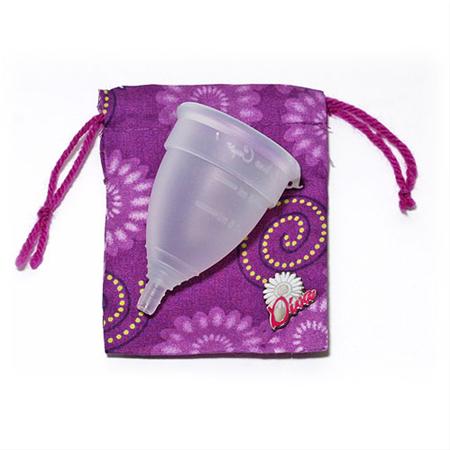
                                                  
I give you the Diva Cup. This little cup of silicone has changed my menstrual life. Seriously. In my search for a more frugal alternative to the organic tampons and pads I had been using for a few months, I stumbled across this in my local natural foods store. I was intrigued, and went home to do some research, as that is what I do. I read many rave reviews, and decided to give it a try. It retailed for about $40, which I originally balked at, but then realized that I was spending almost $20 per month on the organic tampons and pads. The Diva Cup replaced both of those, and it lasts for at least one year. Sold. It comes packaged in a little cardboard box with only a little piece of plastic on the front of it, and also comes with its very own carry bag, made from cloth. Love. The only other thing you need to purchase to go with it is a bottle of natural, unscented soap to wash it with. I buy a 100% natural unscented soap that is about $5 for a bottle that lasts at least 3 months. The wonderful thing about the cup is that you can leave it in for up to 12 hours, there is no concern about Toxic Shock Syndrome, and it is pretty much leak proof. And it is extremely comfortable. You simply empty it a few times a day, wash it with the soap, and replace. At the end of your cycle each month, they recommend you boil it for 20 minutes to sterilize it, then just keep it in its nifty carry bag until next month. I didn't realize exactly how comfortable it was until last month, when I forgot the cup at home and was in need of it at work. I pulled out one of my last remaining tampons, and I could not believe how uncomfortable I was for the rest of the day. 

So that is my green alternative to tampons and pads, and seeing as this is turning in to a ridiculously long post, I will leave you with the hopes that you will research this product, and then try it! You won't regret it (I hope).
Have a lovely Thursday!

Brenna


Friday, January 21, 2011

Green Alternatives: Plastic Wrap

I am going to be starting a new series of posts called Green Alternatives, that will be focusing on alternatives to every day wasteful products. This first post will be about plastic wrap.

Plastic wrap is not very nice to our dear Mother Earth. It is intended as a single use product, and will literally take hundreds of years to even begin to break down in the environment. It is typically made out of highly toxic PVC (polyvinyl chloride) or PVDC (polyvinylidene chloride) and also contains phthalates, which are known to cause developmental problems in children and hormone disruptions. And we use this stuff to wrap our food. Gross. It is also entirely unnecessary, and there are some lovely alternatives. Aluminum foil is probably the most "convenient" (a word I despise) alternative, and probably the most universally available, but it also has it's drawbacks. It takes an amazing amount of energy to produce aluminum foil. However, it can be reused numerous times, unlike it's vile counterpart, and can be recycled in most cities. But lo and behold, I have discovered something even more amazing.


These lovely things are called Abeego Flats, and they are an entirely natural, reusable alternative to plastic wrap. They are made of a hemp/cotton fabric blend and coated in beeswax and plant extracts to make them sticky and pliable. This particular set is from The Good Planet, a great Eco store located on Vancouver Island. I received these as a Christmas present from D, and I love, love, love them! They come in packages of three different sizes which will work on any sized dish. You simply roll them out and stick them onto your desired bowl, and they mold and stick beautifully to it! After you are done with them, simply wash them in cold water and store for later use. Ok, they may not seal quite as well as the plastic wrap, but they lock in moisture and keep food fresh. I don't require my wrapped food to be able to withstand upside down flips and shakes. My fridge always remains in an upright position.

But the best part of these is their smell. Sweet beeswax that is mixed in with a light, natural fabric scent that makes me want to dip these in my tea or suck on them. Mmmm. No more nasty weird plastic smell, and I am no longer wary of wrapping food and envisioning chemicals leeching into my delicious home cooked meals.  I am one happy eco geek! Do you have alternatives for environmental no-no's? I would love to hear what you have discovered!

Brenna

Friday, December 3, 2010

The Lowdown on Trees

Well, winter has arrived, and I could not be more excited! We are in full blown Christmas mode here, and I am loving every moment!

 Last Sunday we went trekking out to our local tree farm and traipsed through the snow to find the perfect tree for our living room. It was wonderful being in the fresh air and so much more fun picking out a slightly imperfect and unique tree as opposed to the generic clones you see tied up in front of grocery stores. Getting a tree at your local tree farm is the greenest way to go, as it has the smallest carbon footprint due to the fact that it is not imported from another city and/or country. Most grocery stores import their trees, and although I did notice last year that a lot of them had advertised that they carried Canadian trees exclusively, I can still pretty much guarantee they did not get them from a local farm.

The other option for your decorating needs is to go fake. But not so fast my friends. Despite the fact that they are advertised as being the "green" way to go (no pun intended), artificial trees are made up of some scary things, such as PCV, which is a potential source of hazardous lead, and most are imported from China. Not exactly eco-friendly. Although they do last a lifetime, so does their environmental impact. Plus, who can beat hand picking your very own tree and cutting it down with your own two hands (no chainsaw needed)?

                                 Sorry, I forgot to get a picture before we started decorating!

Trees that are freshly cut also have the added benefit of smelling heavenly as well as lasting much longer than their imported counterparts. Plus we also had several varieties to chose from, from Douglas Fir to Blue Spruce. No such variety at the grocery store. I also love the fact that we are able to support a local family business. We paid them in their living room after we had taken our pick from what is basically their back yard. Could you get any more personal than that? Now if only I could finish up the MANY knitted gifts that are looming over my head! Hope everyone enjoys their weekend!

Brenna